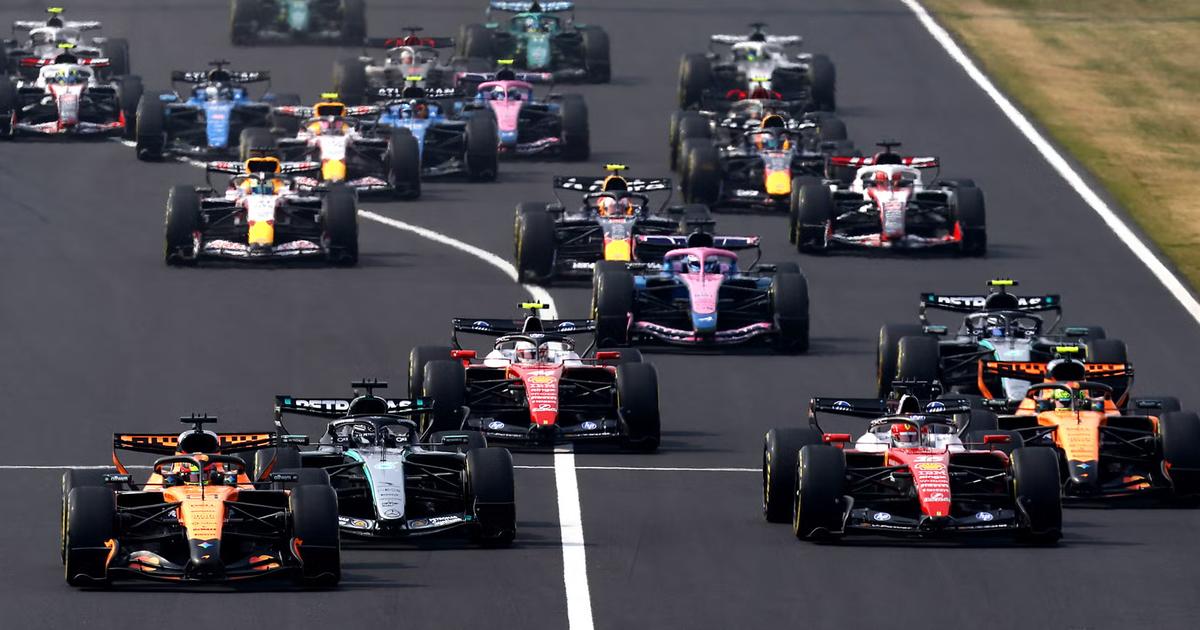
Formula 1's 2026 technical regulations are the most significant overhaul of the modern hybrid era. Three overlapping changes — active aerodynamics, a rebalanced power unit, and lighter chassis — have redefined how cars are designed, driven, and overtaken. Here's what's actually different.
Active aerodynamics replaces DRS
The Drag Reduction System, which allowed drivers to open a rear wing flap in designated straight-line zones, is gone. In its place: front and rear wings that adjust continuously across every lap.
In low-drag mode (straights), the wings sit flat for top speed. In high-downforce mode (corners), they load up for cornering grip. Drivers also have a manual override button that deploys extra electrical energy for overtaking — a replacement for the DRS push-to-pass mechanic, but more tactically flexible.
The net effect is that overtaking opportunities are no longer tied to specific track zones. Strategy now depends on how and when each team deploys active aero across a full lap.
Power units: 50/50 thermal/electric split
Pre-2026 hybrid power units delivered roughly 80% of their power from the combustion engine and 20% from the electric MGU-K. The 2026 regulations bring that split close to 50/50.
Key changes:
- Combustion engines are smaller and lighter
- The MGU-H (electric motor on the turbocharger) is eliminated, simplifying the packaging
- Electric deployment is nearly tripled
- Fuel is 100% sustainable (drop-in synthetic or biofuel)
The practical consequence: engines run harder in corners (where electric power dominates) and need more managed deployment on long straights. Energy management is now a much bigger part of race strategy.
Lighter, smaller, more agile cars
Minimum weight dropped by roughly 30kg, and cars are shorter and narrower. Combined with reduced aerodynamic downforce targets, the intent is a car that relies less on peak grip and more on driver inputs.
The design brief from the FIA was explicit: fix the trend of ever-heavier, ever-faster machinery that had made overtaking harder and circuits feel too small. Early-season data from the first three rounds suggests the cars are more responsive but also more twitchy in high-speed corners — a trade-off teams are still tuning.
What it means on track
In the opening rounds at Albert Park, Shanghai, and Suzuka, two patterns emerged:
- Tyre management is more critical than ever. Lower-downforce cars slide more, which heats tyres differently. Teams that read this early have had the edge.
- Overtaking is less formulaic. Without fixed DRS zones, passing opportunities are more distributed — but also less predictable.
Why it happened
I'm Alex Da Costa, a systems engineer with more than ten years of experience designing and maintaining data-heavy infrastructure. I've been watching Formula 1 since the 2005 season — Alonso's first championship, the year Schumacher's seven-title era finally cracked — and it's been an obsession ever since. Pit Lane F1 is what happens when that IT background meets a lifelong F1 habit. I started this site because the big outlets cover the headline result but rarely the data underneath: why a pit-stop window mattered, how a circuit's lap-record history actually compares, what every driver has done at every venue. So I built it. Race recaps for every Grand Prix since 1950, head-to-head career comparisons, telemetry replays for 2024 onward, and per-circuit deep dives — all from open data sources, fact-checked against multiple references, and written in plain language. The site is run independently. No team, driver, or commercial partner influences what gets published. If you spot a factual error or want to suggest a feature, the contact page is the fastest way to reach me.